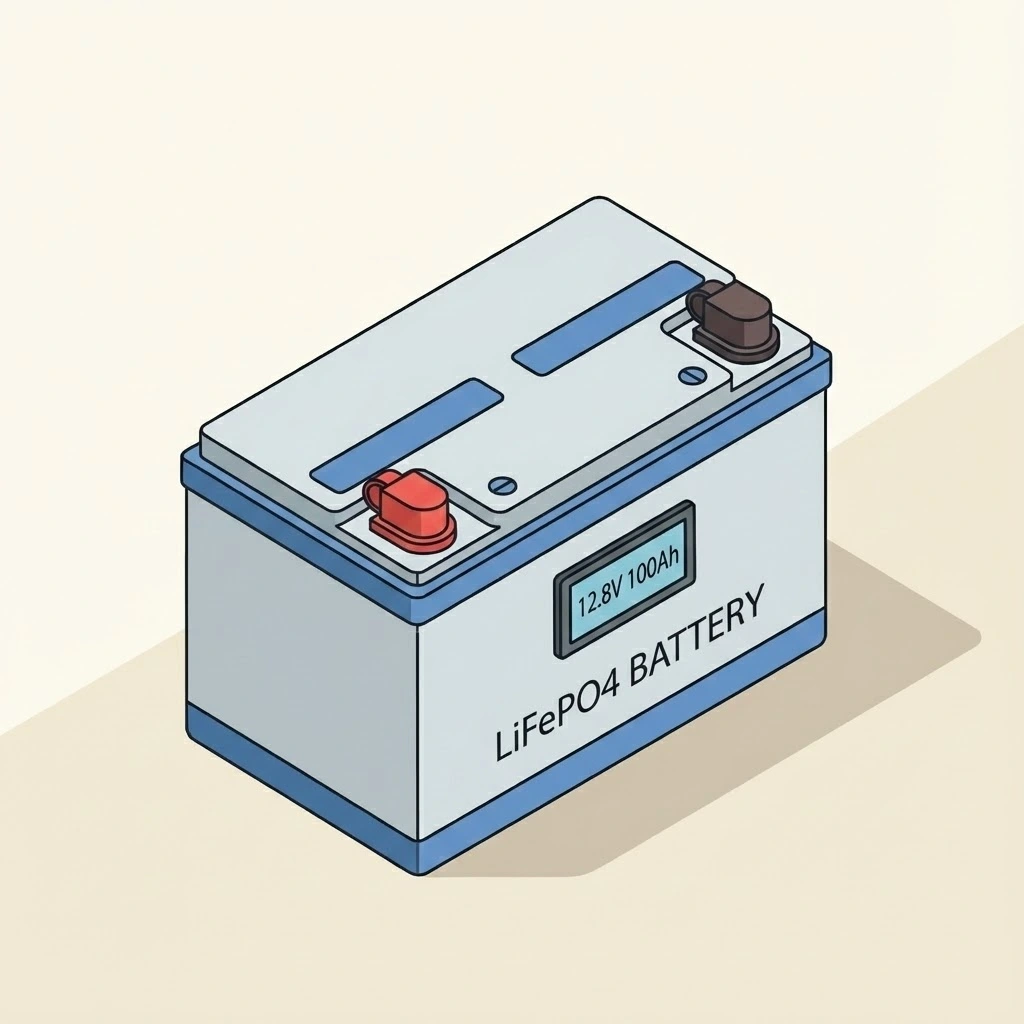
Imagine a world where you don't have to worry about the power going out during a storm. Imagine ignoring the rising costs of electricity from your utility company because you are storing your own sunshine in a box on your garage wall. This isn't science fiction anymore; it is the reality for thousands of American homeowners right now. The technology that makes this possible is changing, and for the better. If you have been looking into solar power or home batteries, you might have heard a new buzzword: LFP.
LFP stands for Lithium Iron Phosphate. It is a type of battery chemistry that is quickly taking over the home energy world. For a long time, the batteries we used in our phones, laptops, and even early electric cars were made of a different mix of chemicals, usually involving nickel and cobalt. Those batteries were great because they were light and small. But when it comes to powering your house, you don't care if the battery is a little heavy. You care that it is safe, that it lasts a long time, and that it doesn't cost a fortune. That is exactly where LFP shines.
This report is going to be your deep dive into this technology. We are going to strip away the confusing engineering jargon and talk straight. We will explain why companies like Tesla, Enphase, and FranklinWH are all switching to this chemistry.1 We will look at how they handle the freezing cold winters in the Midwest and the scorching heat in Arizona. We will crunch the numbers on why buying a battery that lasts 15 years is smarter than buying one that lasts 7.
By the end of this guide, you will know more about home batteries than most solar salespeople. You will be able to look at a spec sheet and know exactly what you are buying. So, let’s get started on your journey to energy independence.
---
Part 1: What is LFP and Why Should You Care?
1.1 The Alphabet Soup of Batteries
To understand why LFP is a big deal, we have to look at what came before it. Most lithium-ion batteries—the kind you have probably used your whole life—work by moving lithium ions back and forth between two ends of the battery. One end is called the cathode (positive) and the other is the anode (negative). The "secret sauce" of a battery is what that cathode is made of.1
For years, the industry standard was NMC, which stands for Nickel Manganese Cobalt. If you drive an older electric car or use a cordless drill, it likely runs on NMC. These batteries are like racehorses. They are lightweight, they pack a huge punch of energy in a small space, and they are fast. This is perfect for a car where every pound of weight matters. You don't want a heavy battery slowing down your sports car.
But your house isn't a sports car. Your house sits still. It doesn't matter if the battery on your garage wall weighs 200 pounds or 300 pounds. It isn't going anywhere.
Enter LFP, or Lithium Iron Phosphate. These batteries use iron and phosphate for the cathode. Iron is heavy. It makes the battery bulkier. But iron is also tough. The chemical structure of an LFP battery is shaped like a crystal cage called an "olivine" structure. It is incredibly strong. When the lithium ions move in and out of this cage, the cage doesn't break or swell. It stays solid.1
1.2 The "Workhorse" vs. The "Racehorse"
Think of LFP as the workhorse of the battery world. It might not be as light or compact as the NMC racehorse, but it can pull the plow all day, every day, for years without getting tired.
Here is a simple comparison of what this means for you as a homeowner:
| Feature | The Racehorse (NMC) | The Workhorse (LFP) | Why You Should Care |
|---|---|---|---|
| How long it lasts | 1,000 - 2,500 Cycles | 3,000 - 8,000+ Cycles | LFP lasts 2 to 3 times longer. You won't have to replace it in a decade.1 |
| Safety | Can catch fire at lower temps | Very hard to burn | LFP is much safer to have inside your home or garage.6 |
| Stuff inside | Nickel and Cobalt | Iron and Phosphate | LFP uses common materials and avoids toxic metals like cobalt.1 |
| Daily Use | Don't charge to 100% | Charge to 100% is fine | You get to use the whole battery you paid for with LFP.6 |
The data tells a clear story. While NMC is great for things that move, LFP is the king of things that stay put. This is why the home storage market is shifting almost entirely to LFP.1
1.3 Why Iron Makes Your Wallet Happy
Let's talk money. Iron and phosphate are cheap. They are found all over the earth. Nickel and cobalt are expensive and hard to find. Because the raw materials for LFP are cheaper, the batteries themselves are generally more affordable to make. Usually, LFP batteries are about 20% cheaper to produce than NMC batteries.1
But the real savings isn't just in the purchase price; it is in how long the battery lasts. We call this "Levelized Cost of Storage." It sounds fancy, but it just means: "How much does it cost me to store one unit of electricity over the entire life of the battery?"
Because an LFP battery lasts nearly three times as long as an NMC battery, the cost over time is much, much lower. If you buy an NMC battery, you might have to replace it in 7 or 8 years. If you buy an LFP battery, it could easily last 15 to 20 years.10 That means you buy it once, and you are set for a generation.
---
Part 2: Safety First – Why LFP Won't Burn Down Your House
2.1 The Nightmare Scenario: Thermal Runaway
Safety is the number one thing homeowners ask about. We have all seen the news stories about hoverboards or cell phones catching fire. Those fires happen because of something called "thermal runaway."
Thermal runaway is a chain reaction. Imagine a pile of dry leaves. If you drop a match on it, one leaf catches fire. The heat from that leaf makes the next leaf catch fire, and soon the whole pile is blazing. In a battery, if a cell gets too hot or is damaged, it releases heat. In older battery chemistries, that heat causes the oxygen inside the battery to separate and feed the fire. It creates its own oxygen supply, making the fire incredibly hard to put out.3
2.2 The LFP Shield
LFP batteries are different because of that strong chemical cage we talked about earlier. The bond between the phosphorous and the oxygen atoms in an LFP battery is extremely tight. It is very, very hard to break that bond.
To get an NMC battery to go into thermal runaway, you only need to heat it up to about 410°F (210°C). That is hot, but a house fire or an electrical short could reach that temp.
To get an LFP battery to go into thermal runaway, you have to heat it up to over 518°F (270°C). That is a huge difference.6 Even if you manage to get it that hot, LFP batteries don't release oxygen in the same way. They tend to smoke and smolder rather than explode into fierce flames.
This is why many experts say LFP is the safest chemistry available for home storage today.11 If you are hanging a heavy box of chemicals on the wall of the garage where your kids park their bikes, you want the one that is hardest to burn.
2.3 Passing the Nail Test
Engineers do crazy things to test batteries. One of the most famous tests is the "Nail Penetration Test." They literally drive a steel nail through a fully charged battery cell.
- NMC Result: When you drive a nail through a charged NMC cell, it usually explodes into fire almost instantly. The internal short circuit creates massive heat, and the chemistry can't handle it.
- LFP Result: When you drive a nail through an LFP cell, it usually just gets hot and smokes. It rarely catches fire.5
This matters because accidents happen. Maybe a car bumps the battery in the garage. Maybe a shelf falls on it. With LFP, physical damage is far less likely to turn into a catastrophe. This safety profile is a big reason why companies are comfortable offering these batteries for indoor installation in basements or utility rooms, although we will talk more about placement later.13
---
Part 3: Living with LFP – Daily Performance
3.1 The "100% Charge" Freedom
If you have an electric car or a modern smartphone, you might have been told: "Don't charge it to 100% every day. Stop at 80% to make it last longer." This is true for NMC batteries. Sitting at 100% charge stresses them out chemically.
LFP batteries are the opposite. They actually like to be charged to 100%. In fact, they need it.
LFP batteries have a very steady voltage. Whether the battery is 20% full or 80% full, the voltage output is almost exactly the same. This makes it really hard for the battery's computer (the Battery Management System, or BMS) to guess how much power is left just by looking at the voltage.9
By charging the battery to 100%, the computer gets a "reset" point. It knows, "Okay, now I am definitely full." This helps the computer stay accurate so it doesn't tell you that you have 50% power when you really only have 10%.
For you, this is great news. It means you can use the entire capacity of the battery every single day. If you buy a 13.5 kWh battery, you get to use 13.5 kWh. You don't have to "save" the top 20% for special occasions.8
3.2 Power vs. Energy: What Can You Run?
When shopping for batteries, you will see two main numbers: Energy (kWh) and Power (kW). It is easy to confuse them, so let's break it down.
- Energy (kWh - Kilowatt-hours): This is the size of the gas tank. It is how much electricity the battery can hold. If you have a 10 kWh battery, you can run a 1 kW appliance for 10 hours.
- Power (kW - Kilowatts): This is the size of the engine. It is how fast the battery can pump electricity out. If you try to start a huge air conditioner that needs 8 kW of power to start up, but your battery can only push out 5 kW, the AC won't start.
LFP batteries generally have slightly lower power density than NMC, but modern home batteries pack plenty of punch.
- Tesla Powerwall 3: This beast can push out 11.5 kW of continuous power. That is huge. It is enough to run a whole house, including central air conditioning, without breaking a sweat.2
- Enphase IQ 5P: This is a modular system. Each small battery pushes 3.84 kW. If you want more power, you just add more batteries. Three of them together give you about the same power as one Tesla.16
- FranklinWH aPower: This unit offers 10 kW of continuous power, which is also very strong and capable of starting heavy appliances.18
The "Surge" Factor:
When a motor starts (like in your fridge or AC), it needs a huge spike of power for just a split second. This is called the "surge" or LRA (Locked Rotor Amps). LFP batteries are very good at handling these short spikes. The FranklinWH battery, for example, can surge up to 15 kW for 10 seconds to get those heavy motors moving.19
3.3 The "Black Start" Capability
Imagine the grid goes down at night. Your battery powers your house until it hits 0% and shuts off. The next morning, the sun comes up. Can your solar panels turn on?
With old solar systems, the answer was no. The solar inverter needed grid power to wake up. This led to the "zombie apocalypse" scenario where you have solar panels on your roof, the sun is shining, but you have no power because your battery is dead.
Modern LFP systems like the Tesla Powerwall 3 and FranklinWH have "Black Start" capability. They save a tiny sliver of battery power just to wake themselves up in the morning. As soon as the sun hits the panels, the battery uses that reserve energy to turn on the solar inverters, and the system comes back to life automatically.20 This is a critical feature for surviving multi-day power outages.
---
Part 4: The Cold Weather Challenge
This is the most important section for anyone living north of the Sun Belt. If you live in New England, the Midwest, or anywhere it snows, listen up.
4.1 Batteries Hate the Cold
Batteries are like people; they are happiest when it is roughly room temperature (70°F). When it gets cold, the liquid inside the battery (the electrolyte) turns into molasses. The lithium ions struggle to swim through this thick goop.
For LFP batteries, cold is a specific enemy. If you try to charge an LFP battery when its internal temperature is below freezing (32°F / 0°C), you can permanently ruin it. The lithium ions can't get into the anode fast enough and instead plate onto the surface as solid metal. This is bad.
Because of this, the battery's computer (BMS) will simply refuse to charge if it is too cold. You could have bright winter sun hitting your panels, but if your battery is frozen, it won't store a single drop of that energy.22
4.2 How Engineers Solved the Cold Problem
Manufacturers know about this limitation, so they have built heaters into the batteries. However, they do it in different ways, and this matters for you.
Method 1: Liquid Heating (Tesla Powerwall 3)
Tesla uses a liquid thermal management system, similar to what is in their cars. Fluid pumps around the battery cells to keep them at the perfect temperature.
- How it works: If a snowstorm is coming, the "Storm Watch" mode kicks in. It can actually "pre-condition" the battery, using grid power to heat the fluid and warm up the cells before the cold hits. This allows the battery to keep working at full power even when it is -4°F (-20°C) outside.24
- The Trade-off: This heating uses energy. In very cold weather, you might see "phantom drain" where the battery uses some of its stored power just to keep itself warm.26
Method 2: Heating Blankets (FranklinWH)
FranklinWH uses a simpler but effective approach: internal heating pads.
- How it works: When the sensors detect the battery is getting too cold, the heating pads turn on to warm the cells. This ensures the battery can safely accept a charge. They claim reliable performance down to -4°F (-20°C) as well.18
- The Trade-off: Like Tesla, this consumes energy.
Method 3: Passive Management (Enphase IQ 5P)
Enphase decided to avoid moving parts like fans or pumps to make the battery more reliable (fewer things to break). They rely on "passive cooling."
- How it works: In the cold, the Enphase battery will use its internal electronics to generate some heat, but it generally relies on the BMS to slow down charging and discharging to protect the cells.
- The Trade-off: In extreme cold, the Enphase battery might limit how much power it can give you or how fast it can charge more aggressively than the liquid-cooled Tesla. It might "derate" (slow down) to keep safe.27
4.3 Where Should You Install It?
Because of this cold sensitivity, where you put the battery is a huge decision.
The Garage: The Goldilocks Zone
For most Americans, the attached garage is the best spot. Even in winter, an attached garage rarely drops all the way to the outside temperature. It stays a little warmer because it is attached to your house. This "buffer" helps the battery stay in its happy zone without working its heater too hard.22
- Pros: Keeps battery warmer in winter, cooler in summer. easy access.
- Cons: You lose some wall space.
Outdoors: Only if Necessary
You can install these LFP batteries outside. They are waterproof and rated for it. But in a cold climate, an outdoor battery will spend a lot of energy heating itself. If you lose power in a blizzard, you don't want your battery wasting 10% of its energy just trying to stay warm. If you live in a mild climate like California or Florida, outdoor install is perfectly fine.30
Indoors (Basement): The Performance Winner
A basement is perfect for temperature. It stays roughly 60°F year-round. Your battery will perform at its absolute peak here.
- The Catch: Fire codes. Even though LFP is safe, many local inspectors are strict about big batteries inside the "living space" of a home. You might need to install smoke detectors, heat alarms, or even sprinklers depending on your town's rules (NFPA 855 is the code they look at).13
---
Part 5: The Big Brands Head-to-Head
Now that we understand the tech, let's look at the specific products you will likely be quoted by installers.
5.1 Tesla Powerwall 3
The All-in-One Giant
Tesla is the Apple of home energy. The Powerwall 3 is sleek, powerful, and integrates everything into one box.
- Capacity: 13.5 kWh (A good standard size).
- Power: 11.5 kW (Very high power).
- Chemistry: LFP.
- Special Feature: It has a solar inverter built-in. If you are getting a brand new solar system, this saves you money because you don't need to buy a separate inverter box for the wall.
- Warranty: 10 years, unlimited cycles.
- The Vibe: It works seamlessly, the app is beautiful, and it handles heavy loads easily. It is liquid-cooled, making it a beast in extreme weather.2
5.2 Enphase IQ 5P
The Modular Lego Blocks
Enphase is the leader in "microinverters," where every solar panel gets its own tiny computer. Their battery follows the same philosophy.
- Capacity: 5 kWh per block.
- Power: 3.84 kW per block.
- Chemistry: LFP.
- Special Feature: Distributed reliability. Each battery has six mini-inverters inside. If one breaks, the others keep working. You never lose the whole system.
- Warranty: 15 years (Industry leader).
- The Vibe: You can size it perfectly. Need a little backup? Buy one. Need to run a mansion? Buy four. It talks perfectly to Enphase solar panels, which are on millions of roofs.16
5.3 FranklinWH aPower
The Swiss Army Knife
FranklinWH is a newer challenger, but they are winning people over with flexibility.
- Capacity: 15 kWh (Bigger than Tesla).
- Power: 10 kW.
- Chemistry: LFP.
- Special Feature: The "aGate." This smart controller can manage your grid connection, your solar, your battery, AND a backup generator (like a Generac). It can automatically start your gas generator to recharge the battery if the sun isn't shining.
- Warranty: 12 years (standard), upgradable to 15.
- The Vibe: Ultimate resilience. If you live in a hurricane zone or somewhere with multi-day outages, the ability to tie in a gas generator seamlessly is a game-changer.18
Brand Comparison Table
| Feature | Tesla Powerwall 3 | Enphase IQ 5P | FranklinWH aPower |
|---|---|---|---|
| Usable Energy | 13.5 kWh | 5.0 kWh (Stackable) | 15.0 kWh |
| Continuous Power | 11.5 kW | 3.84 kW | 10 kW |
| Cooling Type | Liquid (Active) | Passive (No fans) | Passive (Natural) |
| Cold Weather Heat | Liquid Loop Pre-heat | Internal BMS Control | Heating Blanket |
| Warranty | 10 Years (Unlimited) | 15 Years (6,000 cycles) | 12-15 Years |
| Best For... | New solar installs | Existing Enphase homes | Generator owners |
| Source | 2 | 16 | 18 |
---
Part 6: Economics – Will It Pay Off?
6.1 Return on Investment (ROI)
Batteries are expensive. A typical installation can cost between $10,000 and $15,000 per unit. So, does it make financial sense?
In the past, batteries were just for peace of mind. You paid for them like insurance against blackouts. But rules are changing. In California, for example, a new rule called NEM 3.0 changed everything. It made it so selling your solar power back to the grid pays almost nothing.
Now, the smartest move is to store your solar power in a battery and use it yourself at night. This is called "Self-Consumption." By doing this, you avoid buying expensive electricity from the utility company in the evening.
- Payback Period: In states with high electricity prices (like California, Hawaii, or Massachusetts), a solar+battery system can pay for itself in 7 to 9 years. After that, your power is essentially free.35
- Incentives: The federal government offers a 30% Tax Credit (ITC) on battery storage. If your system costs $15,000, you get a $4,500 tax credit. This is a huge help.35
6.2 Warranty Fine Print: Throughput vs. Years
When you look at warranties, don't just look at the years. Look for the "Throughput" clause. This is like the mileage limit on a car warranty.
- Some warranties say "10 years or 20 megawatt-hours (MWh) of use." If you use the battery heavily every day, you might hit the MWh limit in just 6 years, and your warranty ends.
- LFP Advantage: Because LFP is so durable, companies like Tesla are now offering "Unlimited Cycle" warranties. They are confident you can't wear it out in 10 years no matter how hard you use it.2
---
Part 7: Installation and Maintenance
7.1 Preparing Your Home
Installing a battery isn't just hanging a box. It involves electrical work.
- Main Panel Upgrade: If your home has an old 100-amp electrical panel, you might need to upgrade to 200 amps to handle the new system.
- Critical Loads Panel: If you buy a smaller battery (like one Enphase 5P), you can't power the whole house. The electrician will move your "must-have" circuits (fridge, lights, wifi) to a separate "Critical Loads Panel." The battery will only power that panel during an outage.
- Whole Home Backup: If you buy a big system (like 2 Powerwalls), you can back up the main panel directly. The system simply disconnects the whole house from the grid and powers everything.
7.2 Low Maintenance Life
The beauty of these systems is they are "set and forget."
- Keep it Clear: If it is in the garage, don't pile boxes of holiday decorations against it. It needs air to breathe.
- Wipe it Down: Once a year, take a damp cloth and wipe off dust or spiderwebs. Check the air vents if your unit has fans.
- Check the App: The app is your dashboard. Check it once a week to make sure your solar is producing and your battery is charging. If you see a "Grid Charging" alert when it should be sunny, something might be wrong.37
7.3 Noise
LFP batteries are generally quiet, but not silent.
- Passive Cooling (Enphase/Franklin): These are very quiet, usually around 30 decibels (like a whisper) because they don't have roaring fans.19
- Active Cooling (Tesla): When the Tesla Powerwall is working hard or pre-conditioning in the cold, its pump and fan can ramp up. It sounds like a refrigerator running or a quiet computer fan. It isn't loud, but you might hear it if your garage is dead silent.19
---
Part 8: The Green Picture
8.1 No More Cobalt
One of the best things about buying an LFP battery is what isn't inside it. Cobalt is a metal that is often mined in terrible conditions in the Congo, sometimes using child labor. It is a dirty stain on the clean energy industry.
LFP batteries are Cobalt-Free. By choosing LFP, you are voting with your wallet for a more ethical supply chain. You are using iron and phosphate, which are abundant and mined safely all over the world.1
8.2 Recycling: The Next Challenge
Here is the irony: Because LFP batteries don't have expensive cobalt or nickel, they aren't worth as much when they die. Recyclers love NMC batteries because they can harvest the expensive metals and sell them. LFP batteries are mostly iron, which is cheap.
Right now, recycling LFP is more of a cost than a profit. You might have to pay a fee to have your battery recycled in 20 years, rather than getting paid for it. However, scientists are working hard on new ways to recycle LFP efficiently because millions of these batteries will eventually need a place to go.9
---
Conclusion: Is LFP Right for You?
We have covered a lot of ground. From atomic cages to garage temperatures, you now know the landscape of home energy.
The verdict is clear: LFP is the new standard. The "racehorse" days of NMC are ending for home storage. The "workhorse" LFP has arrived, bringing safety, longevity, and peace of mind to American homes.
You should choose an LFP battery if:
- You want safety: You want the chemistry that is least likely to catch fire.
- You want value: You want a battery that lasts 15+ years, not 7.
- You use it daily: You plan to cycle the battery every night to save money on bills.
- You care about ethics: You want a cobalt-free product.
Things to Watch Out For:
- Cold Weather: If you live in the North, make sure you get a unit with active heating (like Tesla or Franklin) or install it in a garage.
- Space: Make sure you have the wall space, as these units are a bit bulkier.
The technology is ready. The prices are stabilizing. The incentives are available. There has never been a better time to take control of your own power. Whether you choose the sleek Tesla, the modular Enphase, or the flexible FranklinWH, you are stepping into a future where the lights stay on, no matter what the weather—or the utility company—decides to do.
Works cited
- LFP vs. NMC: Which Solar Battery Chemistry Is Best for Your Home? - Capture Energy, accessed December 6, 2025, https://www.capture.energy/blog/solar-battery-chemistry-lfp-or-nmc
- The Best Solar Batteries of 2025: Find Your Perfect Match, accessed December 6, 2025, https://www.solar.com/learn/best-solar-batteries/
- LFP vs NMC: Which Is the Best Choice for Home Battery Backup? - OUPES, accessed December 6, 2025, https://oupes.com/blogs/blogs/oupes-lfp-vs-nmc-which-is-the-best-choice-for-home-battery-backup
- LFP vs NMC for Residential Storage: Cycle-Life Tradeoffs - Anern Store, accessed December 6, 2025, https://www.anernstore.com/blogs/diy-solar-guides/lfp-vs-nmc-cycle-life-ess
- LFP vs. NMC Batteries: Which is the Best Choice? - Evlithium, accessed December 6, 2025, https://www.evlithium.com/Blog/lfp-vs-nmc-batteries-comparison.html
- lfp battery: 7 Powerful Reasons Tesla Owners Win in 2025 - Compass Energy Storage, accessed December 6, 2025, https://compassenergystorage.com/lfp-battery/
- How Does Temperature Affect LFP & Lithium Battery Performance? - EVE Energy, accessed December 6, 2025, https://www.evemall.eu/selection-guide/how-temperature-affect-lfp-lithium-battery
- LFP vs NMC which would you choose ? | MachEforum, accessed December 6, 2025, https://www.macheforum.com/site/threads/lfp-vs-nmc-which-would-you-choose.48201/
- LFP Vs NMC Battery: Complete Comparison Guide - ELB Energy Group, accessed December 6, 2025, https://www.ecolithiumbattery.com/lfp-vs-nmc-battery/
- Solar Battery Types Explained: Compare LFP, NMC & More - Shielden, accessed December 6, 2025, https://www.shieldenchannel.com/blogs/portable-power-station/solar-battery-type
- Complete Guide to LiFePO4 Solar Battery - Jackery Australia, accessed December 6, 2025, https://au.jackery.com/blogs/knowledge/guide-to-lifepo4-solar-battery
- Are LFP Batteries Suitable for Home Energy Systems? - Blue Carbon solar, accessed December 6, 2025, https://bluecarbon.solar/are-lfp-batteries-the-best-choice-for-home-solar/
- LFP vs NMC Battery for Home Storage: Safety and Lifespan - EcoFlow, accessed December 6, 2025, https://www.ecoflow.com/us/blog/lfp-vs-nmc-home-storage-safety-lifespan
- Battery management settings : r/FranklinWH - Reddit, accessed December 6, 2025, https://www.reddit.com/r/FranklinWH/comments/1orq3wx/battery_management_settings/
- Powerwall – Home Battery Storage | Tesla, accessed December 6, 2025, https://www.tesla.com/powerwall
- Enphase IQ Battery 5P Kit Assembly - Off Grid Living Solutions, accessed December 6, 2025, https://www.offgridlivingsolutions.com/products/enphase-iq-battery-5p-kit-assembly-1
- IQ Battery 5P - Enphase, accessed December 6, 2025, https://enphase.com/store/storage/gen3/iq-battery-5p
- Components of FranklinWH System, accessed December 6, 2025, https://www.franklinwh.com/support/overview/components-of-franklin-home-power/
- FranklinWH aPower 2 Lithium Battery | 15kWh Energy Storage - Solar Electric Supply, accessed December 6, 2025, https://www.solarelectricsupply.com/franklinwh-apower-2-lfp-battery-module
- FranklinWH Energy Storage Inc., accessed December 6, 2025, https://www.franklinwh.com/weather/
- IQ Battery 5P Power to live your life - Enphase, accessed December 6, 2025, https://enphase.com/download/iq-battery-5p-sell-sheet
- Temperature Limits for LiFePO₄ Battery Storage: Can I Safely Store Them in My Garage?, accessed December 6, 2025, https://www.hitekenergy.com/news/temperature-limits-for-lifepo%E2%82%84-battery-storage-can-i-safely-store-them-in-my-garage/
- How Cold Weather Affects LiFePO4 Batteries?-News - Neexgent, accessed December 6, 2025, https://www.neexgent.com/article/how-cold-weather-affects-lifepo4-batteries.html
- Advanced Settings | Tesla Support, accessed December 6, 2025, https://www.tesla.com/support/energy/powerwall/mobile-app/advanced-settings
- Tesla Powerwall 3 in Extreme Weather: Performance and Reliability | Uncommon Solar, accessed December 6, 2025, https://www.uncommonsolar.com.au/tesla-powerwall-in-extreme-weather-performance-and-reliability/
- PW3 power use during cold weather : r/Powerwall - Reddit, accessed December 6, 2025, https://www.reddit.com/r/Powerwall/comments/1i0q23x/pw3_power_use_during_cold_weather/
- Battery Power Delivery Reduced in Low Temps : r/enphase - Reddit, accessed December 6, 2025, https://www.reddit.com/r/enphase/comments/1i518jy/battery_power_delivery_reduced_in_low_temps/
- Temperature guidelines for IQ Battery 5P installation | Enphase, accessed December 6, 2025, https://enphase.com/download/temperature-guidelines-iq-battery-5p-installation
- Best Place to Install a Home Battery Storage System in New Jersey: Garage vs Basement vs Outdoor - PowerLutions Solar, accessed December 6, 2025, https://powerlutions.com/battery-storage/best-place-to-install-a-home-battery-storage-system-in-new-jersey-garage-vs-basement-vs-outdoor/
- Indoor vs. Outdoor - Where to Install Your Solar Battery - sonnen, accessed December 6, 2025, https://sonnen.com.au/blog/indoor-vs-outdoor-where-install-your-solar-battery/
- Finding the Perfect Home for Your Home Battery: Indoor vs. Outdoor Installation - EP Cube, accessed December 6, 2025, https://www.epcube.com/en-US/blog/solarpower/finding-the-perfect-home-for-your-home-battery-indoor-vs-outdoor-installation
- The best home battery and backup systems of 2025: Expert tested | ZDNET, accessed December 6, 2025, https://www.zdnet.com/home-and-office/energy/best-home-battery/
- Is Tesla Powerwall 3 LFP? Exploring the Battery Chemistry, accessed December 6, 2025, https://www.smartenergyanswers.com.au/blog/is-tesla-powerwall-3-lfp-battery-chemistry
- Tesla vs Franklin vs Enphase: NH's Best Home Battery Guide - Sundial Solar, accessed December 6, 2025, https://sundialsolarnh.com/choosing-your-home-battery-a-new-englanders-comparison-of-tesla-franklin-whole-home-and-enphase/
- Solar ROI Calculator: How to Calculate Your Solar Payback in California (2025 Guide), accessed December 6, 2025, https://nrgcleanpower.com/learning-center/solar-roi-calculator/
- Solar power ROI: How long until your system pays for itself - Enphase, accessed December 6, 2025, https://enphase.com/blog/homeowners/solar-power-roi
- Maintenance and Upkeep of Home Batteries - FranklinWH, accessed December 6, 2025, https://www.franklinwh.com/blog/maintenance-and-upkeep-of-home-batteries
- How to Maintain and Extend the Life of Your Solar Battery System | FranklinWH, accessed December 6, 2025, https://www.franklinwh.com/blog/how-to-maintain-and-extend-the-life-of-your-solar-battery-system
- economic and technical challenges of LFP battery recycling, accessed December 6, 2025, https://www.neumaterials.com/news/economic-and-technical-challenges-of-lfp-battery-recycling
- Tesla Powerwall 3: Powering Canadian Homes Through Every Season - XOLAR INC, accessed December 6, 2025, https://xolar.ca/tesla-powerwall-3-powering-canadian-homes-through-every-season/
- Maintenance - Energy Library - Tesla, accessed December 6, 2025, https://energylibrary.tesla.com/docs/Public/EnergyStorage/Powerwall/3/InstallManual/BackupSwitch/en-us/GUID-B6BD7D72-528C-4E7A-B861-46CBF1743CC8.html </a